


Harnessing Solar Power: Calculating Solar System Returns in Australia
Introduction
Australia, blessed with abundant sunshine, has emerged as a global leader in solar power adoption. With the ever-increasing awareness of environmental issues and the financial benefits of renewable energy, many Australian households and businesses are considering solar power systems. This blog explores the essentials of solar power, the process of calculating returns on investment (ROI) for solar systems in Australia, and practical tips to maximize these returns.
Understanding Solar Power
Solar power harnesses energy from the sun using photovoltaic (PV) cells, which convert sunlight into electricity. This electricity can either be used immediately, stored in batteries for later use, or fed back into the grid. The primary components of a solar power system include:
1. Solar Panels: Convert sunlight into direct current (DC) electricity
2. Inverter: Converts DC electricity into alternating current (AC), suitable for home and business use.
3. Mounting Systems: Secure the solar panels to roofs or other structures.
4. Battery Storage: Stores excess electricity for use during non-sunny periods.
5. Metering Systems: Measure the amount of electricity generated and used.
Benefits of Solar Power
1. Environmental Impact: Solar power is a clean and renewable energy source, reducing carbon footprints and greenhouse gas emissions.
2. Energy Independence: Reduces reliance on fossil fuels and the national grid, providing greater energy security.
3. Financial Savings: Significant reduction in electricity bills and potential earnings from selling excess power back to the grid.
4. Government Incentives: Various rebates, grants, and incentives are available to encourage solar adoption
Calculating Solar System ROI
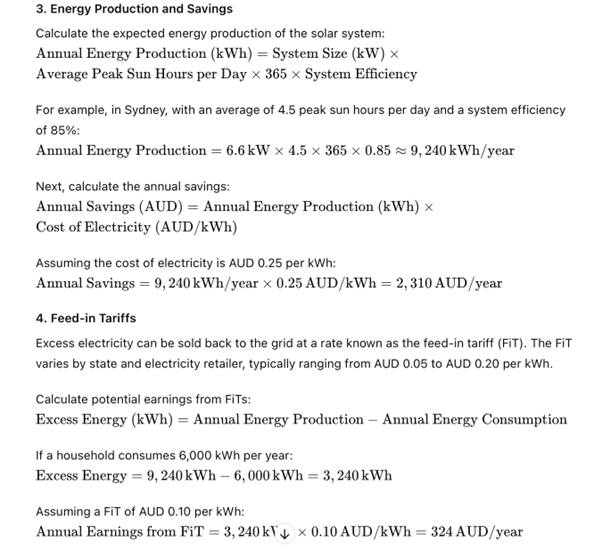
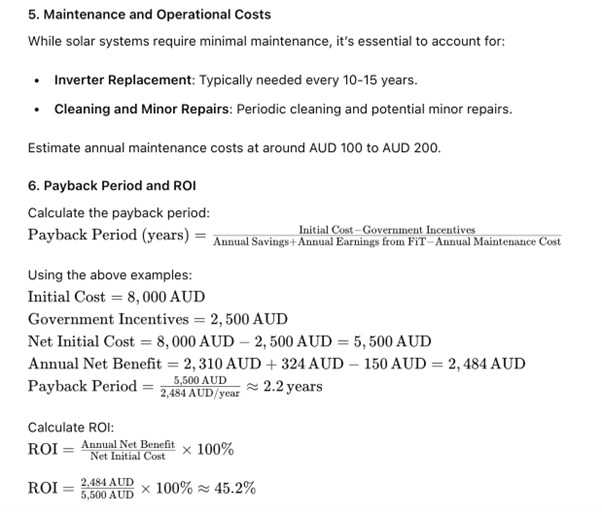
Calculating the return on investment (ROI) for a solar power system involves several factors, including the initial cost, ongoing maintenance, energy savings, and potential earnings from feed-in tariffs. Here’s a step-by-step guide to calculating the ROI of a solar system in Australia:
1. Initial Costs
The initial cost of a solar system includes:
- Solar Panels: The price depends on the quality and efficiency of the panels.
- Inverter: Costs vary based on the capacity and type (string inverters, microinverters, etc.).
- Installation: Professional installation charges can differ based on the complexity of the setup.
- Permits and Inspections: Necessary approvals and inspections can add to the cost. For instance, a 6.6 kW system in Australia might cost between AUD 5,000 to AUD 9,000, including installation.
2. Government Incentives and Rebates
Australia offers various incentives to reduce the upfront cost of solar systems:
Small-scale Technology Certificates (STCs): These certificates can be traded for cash or a discount on the installation cost.
State-specific Rebates: Different states offer additional rebates, such as Victoria’s Solar Homes Program.
The value of STCs depends on the system size, location, and the prevailing market price of STCs. For a 6.6 kW system, STCs might reduce the cost by around AUD 2,500.
Maximizing ROI
1. Optimal System Size: Ensure the system size matches your energy needs. Over-sizing may not yield proportional returns.
2. High-Quality Components: Invest in reliable and efficient components to ensure longevity and performance.
3. Energy Efficiency: Implement energy-efficient practices to maximize the benefits of your solar system.
4. Battery Storage: Consider adding battery storage to store excess energy and reduce reliance on the grid during peak times.
5. Monitor Performance: Regularly monitor your system’s performance to detect and address issues promptly.
Conclusion
Solar power presents a compelling opportunity for Australians to reduce their environmental impact and achieve significant financial savings. By understanding the factors influencing ROI and making informed decisions, households and businesses can maximize the benefits of their solar investments. With the right approach, solar power can provide a sustainable and profitable energy solution for years to come.